
Formal game
Do not discuss candidate moves or use undo. Agree on a maximum thinking time per move before play begins. This site has no chess clock, so both players must observe the agreed limit.
Sharing one device removes the need for a physical set or a network connection, but formal play, instruction, and position analysis require different conventions. Agree on the format, thinking time, and undo policy before play so both players can concentrate on the position.
Do not discuss candidate moves or use undo. Agree on a maximum thinking time per move before play begins. This site has no chess clock, so both players must observe the agreed limit.
Allow pauses, explanations, and undos. Compare the continuation after the original move with the variation after the improved move instead of simply retracting the original move.
Analyze the current game move by move. When opinions differ, undo to the branching point and test each candidate separately. This works well for studying openings and middlegame plans together.
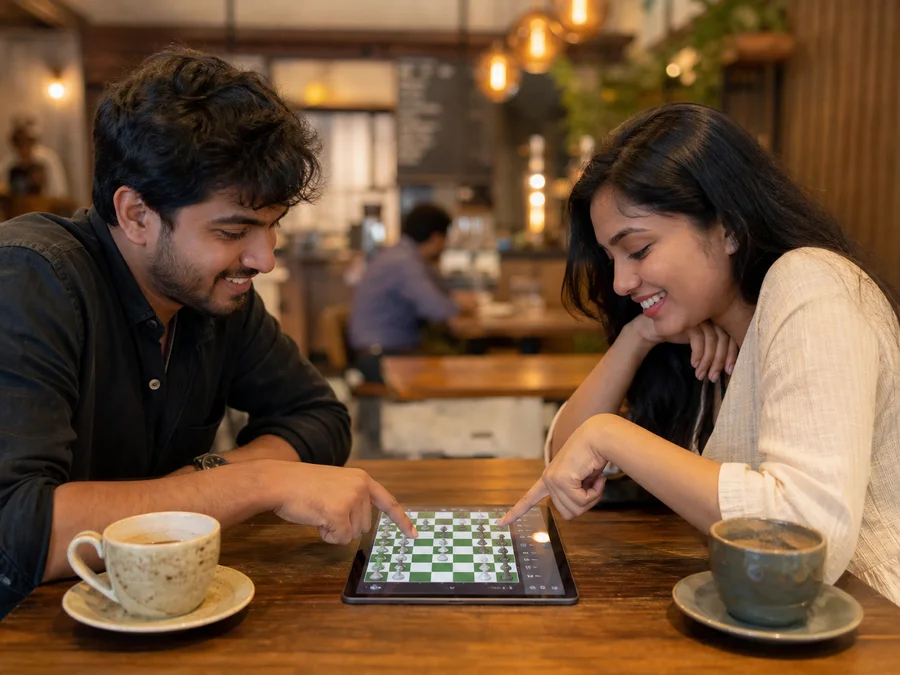
Place the device between both players with the edge of the board parallel to the table. On a smaller screen, use landscape orientation so neither player has to lean sideways to identify the squares.
Do not touch the board while your opponent is thinking; hand over control only after completing your move. A digital board cannot tell whether a player previously touched another piece, so agree before the game whether the touch-move rule applies.
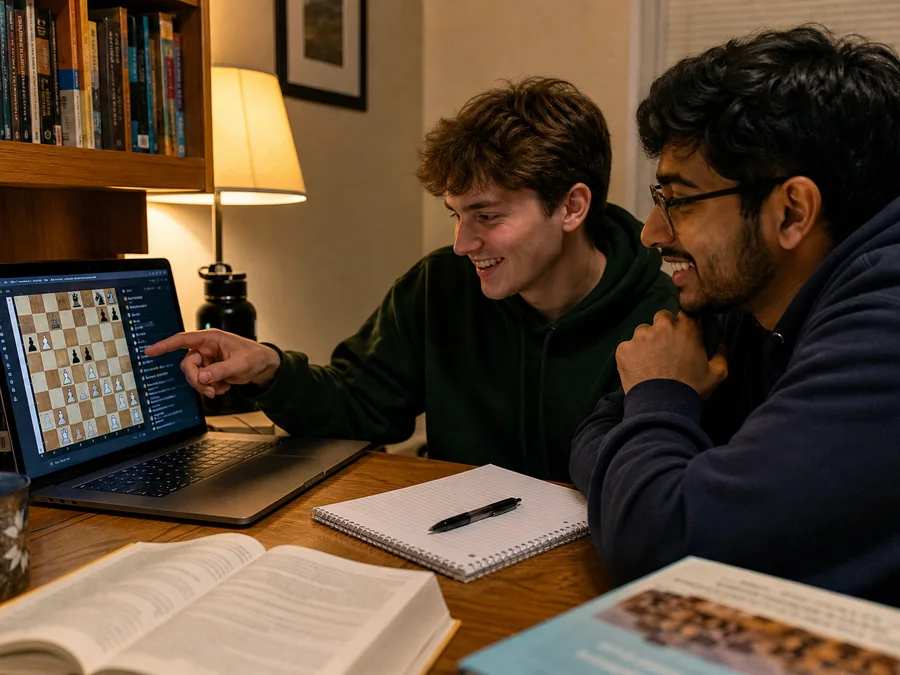
The more experienced player should not announce the best move immediately. Ask the learner to list candidate moves, identify the opponent's threats, and then calculate the main variation for each candidate.
When an undo is needed, return only to the first critical mistake and calculate again from that position. Correcting every move as soon as material is lost does not develop a repeatable decision process.
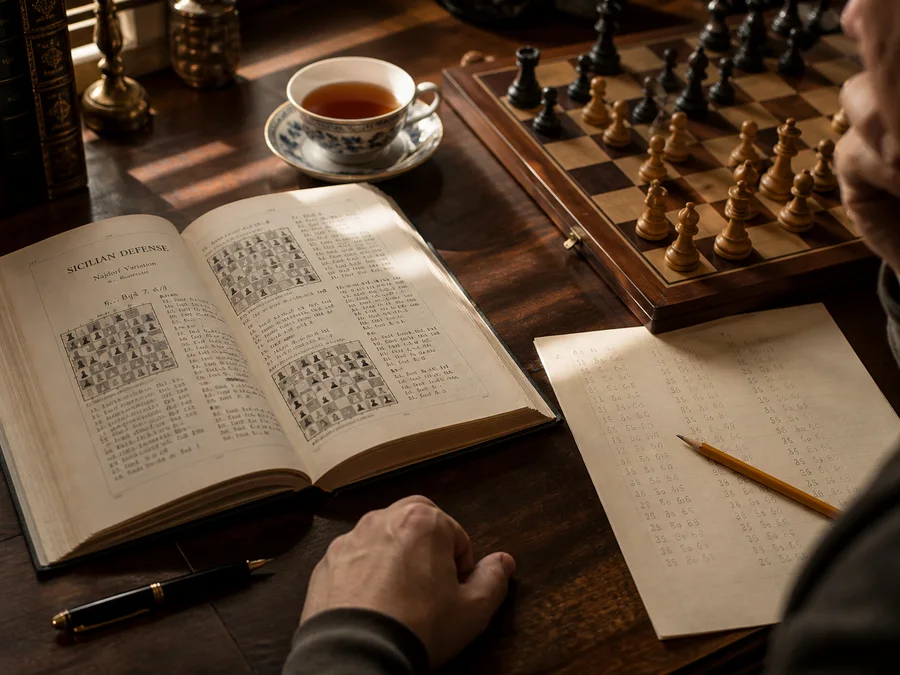
The board validates every move, recognizes check, checkmate, and stalemate, and handles castling, en passant, and pawn promotion. The player to move should still confirm the intended origin and destination squares before completing the move.
Chess clocks, touch-move, permission to undo, and whether an instructor may suggest candidate moves are outside the board's automatic enforcement. Agree on these conditions before the game rather than resolving them during play.

Chess
chess.plyyard.com
Add to Home Screen
Add to Dock